What Is Diversity? How I Define It In A Social Context
Our world has become deeply interconnected, and there is no turning back. That is why it is important to move beyond surface-level definitions of diversity and explore what it means within a social context.
DIVERSITY
Dania Santana
As I walked through the aisles of La Sirena while visiting Santo Domingo in the summer of 2017, searching for a traditional dress for my daughter, who was 8 at the time, I noticed something striking. The distinctive accents of Venezuela, Cuba, and Colombia filled the air as people shopped around me. For a moment, it felt as if I were in Miami.
That experience stayed with me. It made me reflect on diversity—not as an abstract concept, but as something tangible, audible, and present in everyday life. Globalization is no longer a distant idea; it is something we can see and hear in our neighborhoods, our schools, and even in the places we once considered culturally familiar.
Although these demographic shifts have been unfolding for decades, witnessing them so vividly can still feel surprising. Many of us experience a subtle form of cultural disorientation as our communities evolve more rapidly than we expect. We understand that change is inevitable, yet living through it in real time invites deeper reflection.
The reality is that our world has become deeply interconnected, and there is no turning back. That is why it is important to move beyond surface-level definitions of diversity and explore what it means within a social context. Doing so allows us not only to describe diversity, but also to define what we want it to look like in practice as we grow into a more globally connected society.
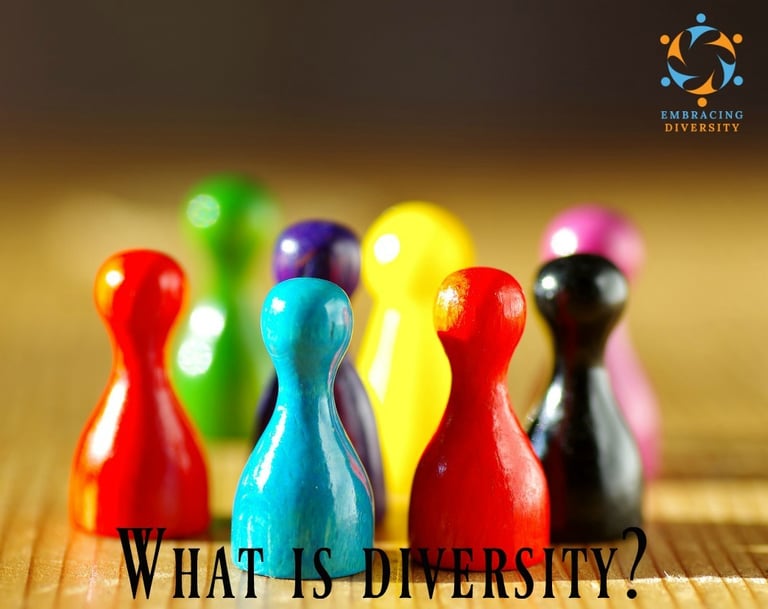
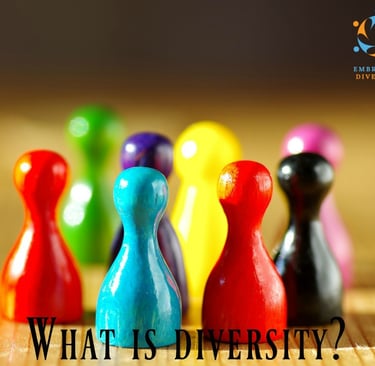
What Is Diversity?
To ground this reflection, I turned to a standard definition. Diversity is commonly understood as the condition of having or being composed of differing elements, and it often refers to the inclusion of people from a range of backgrounds within a group or organization.
While this definition is accurate, it is not complete—at least not in the way we experience diversity in our daily lives. Understanding diversity in social terms requires us to go further. It asks us to consider not only who is present, but how people relate to one another within that shared space.
How I Define Diversity in Social Terms
As I reflected more deeply, I explored related concepts like heterogeneity—the idea of different parts coming together to form a whole. What resonated with me was not just the presence of difference, but the idea of integration: a unified community strengthened by the contributions of its diverse members.
With that in mind, this is how I define diversity in a social context:
Social Diversity
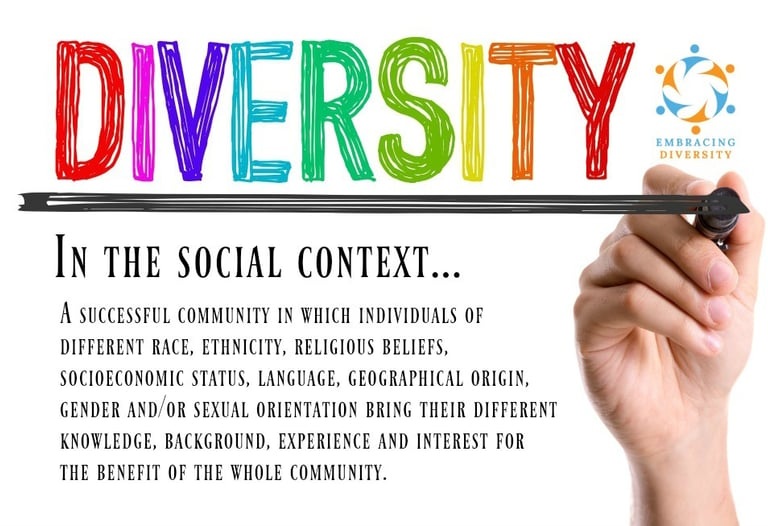
A thriving community where individuals of different races, ethnicities, religious beliefs, socioeconomic backgrounds, languages, geographic origins, genders, and sexual orientations contribute their unique experiences, knowledge, and perspectives for the collective good.
In such a community, people actively practice respect and seek to understand one another across differences. They recognize that, despite varied identities and viewpoints, they share a responsibility to work toward common goals that benefit everyone.
Moving Forward in a Diverse World
As our communities continue to evolve, so too does our understanding of diversity. Digital connectivity has made the world feel smaller, bringing us into closer contact with people whose lives and perspectives may be very different from our own.
Moments like the one I experienced in Santo Domingo are reminders that diversity is no longer theoretical—it is something we live every day. The question is no longer whether our societies will be diverse, but how we will choose to engage with that diversity.
If we are intentional about nurturing respect, understanding, and shared purpose, we have an opportunity to build communities that are not only diverse, but truly thriving.
What does diversity mean to you, and how would you define it in your own community?


Terms & Conditions
Contact
dania@embracingdiversity.us
All content on this website, including but not limited to text, images, graphics, audio, and video materials, is the exclusive intellectual property of Dania Santana and Embracing Diversity, LLC, unless otherwise stated. Such content is protected under applicable copyright and intellectual property laws.
No portion of this website may be reproduced, distributed, transmitted, displayed, published, or otherwise used, in whole or in part, without the prior express written consent of the copyright owner, except as permitted by law. Limited sharing, quoting, and linking are permitted provided proper attribution is given and the content is not altered. Unauthorized use constitutes copyright infringement and may result in legal action.
This website may participate in affiliate marketing programs with trusted service providers and vendors. As such, the site may receive compensation for purchases made through affiliate links, at no additional cost to the user.